

Judge says Quran burning is not a criminal offence
An activist who burned a Quran in front of the Turkish consulate has successfully overturned his conviction for a racially aggravated public order offence by a judge said he was exercising his right to free speech.
Hamet Coskun, 51, held the burning holy book aloft outside his home country’s embassy building on 13 February.
Coskun later told police he was protesting against the Turkish government’s support of radical Islam and claimed relatives had been killed during the Armenian genocide.
A bystander filmed Coskun with the book in his hand and plumes of smoke emerging upwards from it into the sky.
He is seen shouting ‘Islam is the religion of terrorism’: also stating ‘Karan is burning’ and ‘F-ck Islam’.
Coskun was then attacked by Mousa Kadri, 59, who emerged from a nearby building, swinging a bread knife at him shouting: ‘I will come back, I am going to kill you.’
He is seen attempting to fend off Kadri with the burning book.
Coskun was then knocked to the ground by Kadri who aimed several kicks at him, then spat on him.
Last month Kadri, of Notting Hill, admitted assault and possession of an offensive weapon, and was given a 20 week prison sentence suspended for 18 months.
Coskun denied was convicted of a racially aggravated public order offence in June and fined £240, but today he won his appeal against convition at Southwark crown court.
Coskun has been made subject to death threats leading up to the appeal hearing.
Phillip McGhee, prosecuting, said earlier at the hearing: ‘There was a risk of public disorder and it caused public disorder, so it is proportionate to prosecute him.’
Coskun told police that he had burned the Koran because he believes that it incites terrorism.
He said: ‘I’ve done research, much more than someone Islamic. I have more detailed knowledge.
‘The Koran incites people to terrorism. The Koran wants people to be killed.’
‘Muslim people rape young children young girls.’
He said that he was a Marxist and grew up in a secular environment.
‘I was brought up in a secular family. Some of my family were killed in the Armenia genocide.’
Coskun, who currently lives in England, claimed he was not prejudiced against Muslims.
‘I have no prejudice against Muslim people as long as they don’t use violence’.
‘Islam is not a race, Islam is a religion trying to destroy people’s lives.’
Mr McGhee said that Coskun only has limited rights under Article 10 of the European Convention of Human Rights, which protects the right to freedom of expression.
‘Article 10 does not give absolute rights, it is limited by part two of that article
Mr McGhee added: ‘He was not simply engaging in a critical analysis of the tenets of a religion. He was engaging in public disorder, shouting and swearing as he did, including at someone who asked him what he was doing.’
Mr McGhee said that Coskun had suggested that he was motivated by hostility towards Islam and Muslims in his police interview.
‘One shouldn’t shut out the things he said during interview when he was asked why he was doing this.’
But Mr Justice Joel Bennathan said he ‘must allow’ the appeal for Coskun’s conviction for a racially aggravated public order offence to be overturned.
Explaining his decision, he said: ‘(Kadri) being angry is not the same as being harassed, alarmed or distressed.
‘The court should be weary of allowing the criminal reaction of one person to make a criminal of another for exercising their right to free speech.
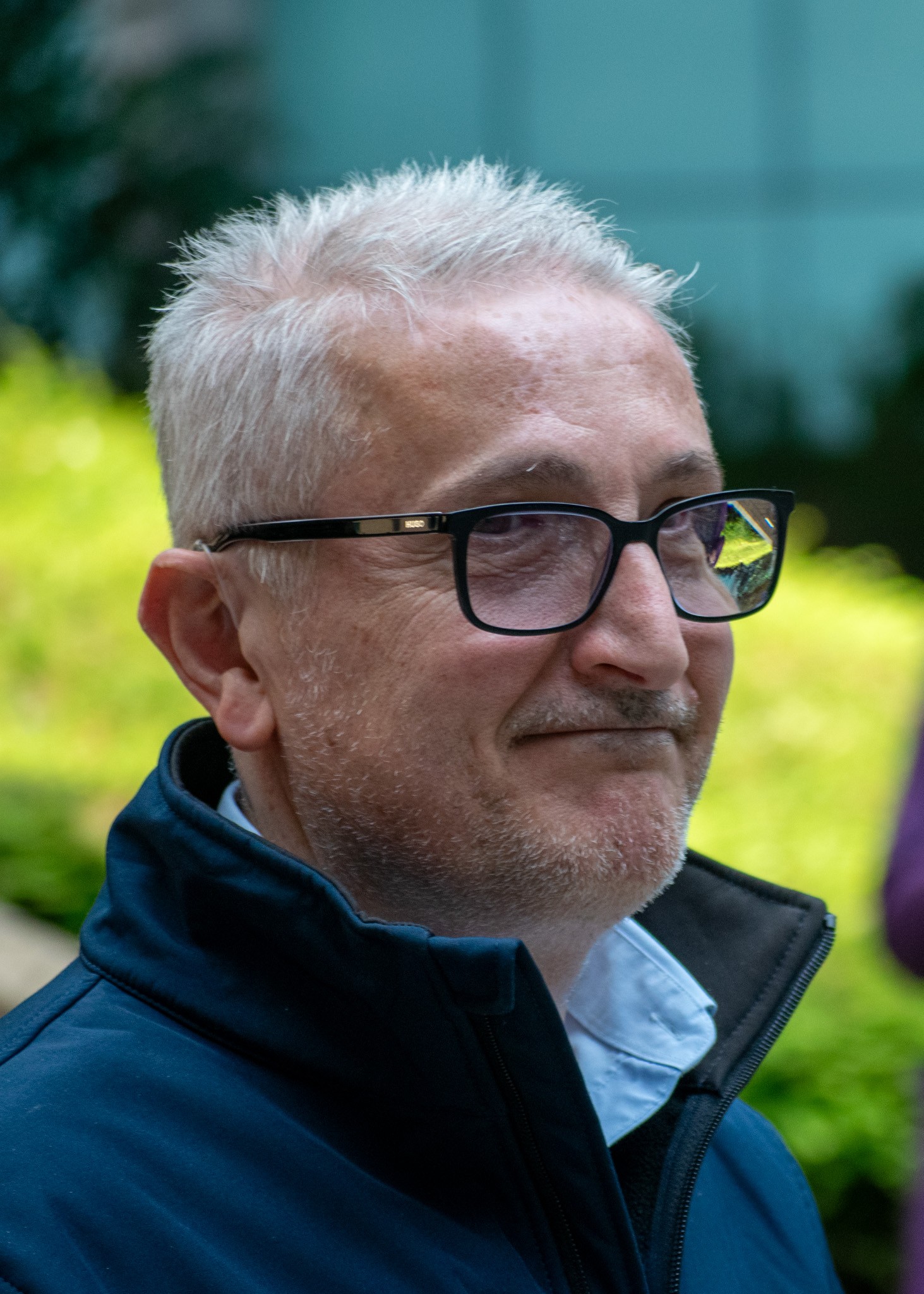
Kadri
‘It follows from our consideration of the evidence that the prosecution has not succeeded in making us sure either that the defendant’s conduct can properly be regarded as disorderly, or that it was in the hearing or sight of a person likely to be caused harassment, alarm or distress.’
The judge thanked the court staff, clerk, list-caller, prosecution and defence for their work on the case.
The judge added: It would be presumptuous of us, sitting as a court of second instance,
to purport to make new law and we do not do so: What follows are clear and wellestablished
propositions in the law of England and Wales.
‘There is no offence of blasphemy in our law. Burning a Koran may be an act that
many Muslims find desperately upsetting and offensive.
‘The criminal law, however, is not a mechanism that seeks to avoid people being upset, even
grievously upset.
‘The right to freedom of expression, if it is a right worth having, must include the right to express views that offend, shock or disturb.
‘We live in a liberal democracy. One of the precious rights that affords us is to
express our own views and read, hear and consider ideas without the state
intervening to stop us doing so.
‘The price we pay for that is having to allow others to exercise the same rights, even if that upsets, offends or shocks us.
‘The criminal courts will interfere to protect people. A person who acts so as to
cause harassment, alarm or distress to another may commit an offence.
The judge added ‘It has long been recognised, both inside and outside the law, that there will be circumstances in which the right to free speech has to yield to the protection of
human beings.’


