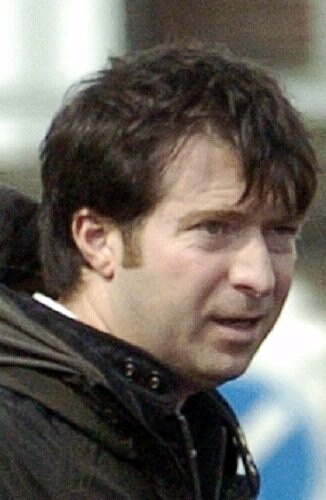
MILLS: ‘FLOWERS GANG’ DRUGS BARON JAILED FOR 17 1/2 YEARS
One of Britain’s top drug barons who created the ‘Tesco’ of cannabis smuggling was jailed for 17-and-a-half years today (weds).
Anthony Mills, 43, masterminded one of the ‘largest and most successful’ operations ever seen in the UK as boss of the ‘Flowers Gang’.
The syndicate hid super-strong skunk weed worth £61 million inside crates of blooms from Holland.
Between June 2006 and November 2007, they moved 18 tons of cannabis through UK ports netting £21 million in profits.
The gang’s endeavours recently formed the plot for an episode of the BBC crime drama ‘The Shadow Line.’
Judge Gregory Stone, QC, told Mills: ‘This was organised crime on a very sophisticated level.
‘The offences continued for long time and were very successful.
‘I heard evidence this was one of the largest and most successful cannabis conspiracies ever, if not the largest and most successful.
‘You were at the head of that organisation.’
Mills also oversaw a massive money laundering operation, setting up companies in international tax havens to hide the gang’s vast profits.
But they made so much money they could they could not spend it quickly enough and when police raided safe houses they recovered wads of £20 notes literally rotting away.
Although he was photographed at ‘board meetings’ at the group’s Surrey base, Mills spent most of his time in Holland liaising with his Dutch suppliers.
When police swooped on his co-conspirators, he was able to evade capture, and was only arrested in Amsterdam in March last year.
Mills’ defence counsel William Clegg QC argued Mills had not been the head of the operation and claimed co-conspirator Terrence Bowler had been the mastermind.
He said Mills had merely been a gang ‘director’, alongside two other men, Peter Moran and Mark Kinnimont,
‘There is no evidence against Mr Mills that would put him higher in the hierarchy than Moran or Kinnimont and, we would submit, that the evidence demonstrates he was in fact lower in the organisation than Bowler,’ he said.
‘It was true that like the others he [Mills] attended board meetings and therefore it is right that the court should place him in a managerial position rather than a hired hand.
‘It is true also that he went with Mr Bowler to Geneva.
‘But, that said, we submit that the role of Mr Mills was correctly identified in the trial as being the Dutch connection.
‘He was involved in the purchase and shipment of the cannabis to the UK but, it is our submission, it was no more than that.’
Judge Stone replied: ‘Mr Bowler was a long standing friend and business partner and it is plain that you and he were very close, but on balance I think it more lilely that you and he were equal in the organisation.
‘However, I am in no doubt that you were senior to Moran and Kinnimont.’
Bowler was jailed for 16 years last March, while Moran Kinnimont, received 14 year sentences each.
The skunk weed was grown in vast greenhouses hidden among legitimate crops.
The gang paid £2,200 per kilogram for the drug before selling it on to regional wholesalers in the UK at £3,400 who traded it on the street for £5,760 per kg.
Regular shipments arrive at Harwich port in East Anglia, with shrink-wrapped packages of skunk hidden inside boxes of flowers.
The crates were delivered to a warehouse in Chatham, Kent where the drugs were separated out and ferried on to secure lock-ups in Kingston, Worcester Park, Epsom and Ashtead in Surrey.
When a shipment of drugs was intercepted in July 2008, the gang simply switched their operation to a warehouse in Leeds, via the port of Hull.
Prosecutor Timothy Cray said: ‘If the man pushing cannabis on the street, the small-time dealer, is equivalent to the market trader selling his fruit and veg outside London Bridge station, then this group were the big players, the Tesco.
‘Anthony Mills was the director of this Tesco.’
The gang’s ‘board of directors’ was under surveillance at Cafe Rouge in Esher, Surrey, on October 22, 2008, as Mills totted up the profits on a calculator.
Police also followed both Mills and Bowler to Geneva in Switzerland, where they were spotted having lunch with employees of a bank where some of the money was laundered.
Detectives are now liaising with colleagues in other countries to try to unravel the network of overseas assets built up by the gang, ahead of confiscation hearings.
The organisation’s turnover in the period covered by the investigation is estimated at £61m, and its profit at £22m.
Mills, of no fixed address, was jailed for ten years for conspiracy to import cannabis and seven-and-a-half years, consecutively, for conspiracy to conceal the proceeds of drug supply.
He admitted laundering money on behalf of others, but no separate penalty was imposed.
During the trial he tried to claim that he had only helped the gang to clean up its profits, but was not part of its inner circle..
Bowler, of (89) St Albans Road, Kingston-upon-Thames, Kinnimont, of (2) Viceroy Lodge, Claremont Rd, Surbiton, Surrey, Moran, of (Flat 2) 267, Fulham Palace Rd, Fulham, admitted conspiracy to import drugs and money laundering.
ENDS