GOSLING: PARAMEDIC STOPPED FROM ELECTROCUTING COLLEAGUE WITH DEFIBRILLATOR
A newly qualified paramedic nearly electrocuted a colleague while trying to revive a patient who had suffered a heart attack, a hearing was told today (Weds).
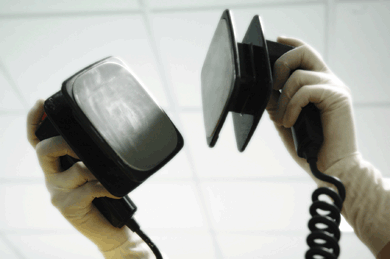
Deborah Gosling was about to deliver a high-voltage shock even though a fellow paramedic was still performing CPR, it was claimed.
She failed to tell him to stand clear and the procedure had to be stopped by her mentor, the Health Professions Council heard.
Gosling had just qualified as a registered paramedic at the time of the alleged incidents in September 2008, after graduating from Sheffield Hallam University.
But she displayed a ‘consistent lack of knowledge of drugs and procedures’, a misconduct hearing was told.
As a newly qualified paramedic, she was supposed to work under supervision for five weeks before being allowed to attend jobs alone.
But repeated concerns about her capability meant the period was extended to more than a year and bosses at Yorkshire Ambulance Service eventually demoted her to assistant practitioner in November 2009.
She still holds this position, the panel was told.
Giving evidence, clinical team educator and trained paramedic Simon Bird said he had attended a heart attack patient with Gosling on September 25, 2008.
When they arrived at the scene, fast responder Steve Knightly was already performing CPR and Gosling was told to take charge, he told the panel.
‘I can’t remember exactly what happened,’ said Mr Bird, who was acting as Gosling’s mentor at the time.
‘But I know I had to say stop because she was about to shock the paramedic, Steve Knightly, who was actually performing CPR at the time, doing chest compressions.
‘I would expect her at this stage to be capable of running a situation, but she also forgot to turn the oxygen off before shocking, which is a fire hazard.’
Later that day, Gosling failed to tell hospital staff about the medication she had given a patient with breathing difficulties.
‘The potential there is that the staff could give more than the recommended dose,’ said Mr Bird.
The following day, he and Gosling went to a man who had been knocked out of his wheelchair by a car, the panel was told.
Gosling is alleged to have tugged at the patient while he was immobilised on a spinal board in an attempt to get a blood pressure reading.
‘The indications were quite high that there was a possible spinal injury,’ said Mr Bird.
‘But I turned around and she was trying to get his arm out of his sleeve by tugging at it.
‘That could potentially affect him. We should be trying to keep him immobile.
‘She wasn’t happy and started to argue the point when I tried to talk the incident through.
‘She said words to the effect of “He’s only fallen out of his wheelchair.”‘
Mr Bird said that, despite several meetings and extra training, Gosling had shown little improvement over the following year and had failed several skills assessments.
‘She compares badly with others,’ he told the panel.
‘Quite often I would ask her to talk about a particular drug and the her stock answer was “I don’t know”.
Ordinarily, if I ask someone a question and they don’t know the answer they come back the next day having read up on it.
‘That never happened. She did not really seem that interested in furthering her knowledge or career.’
Gosling admits not switching off oxygen before shocking the heart attack patient, failing to change an oxygen nebuliser on the patient with breathing difficulties and arguing with Mr Bird about the patient with suspected spinal injuries.
She further admits failing to secure an trachea tube correctly on a fourth patient and failing to cannulate a fifth correctly.
She denies the other allegations against her, but admits her fitness to practice is impaired.
ends