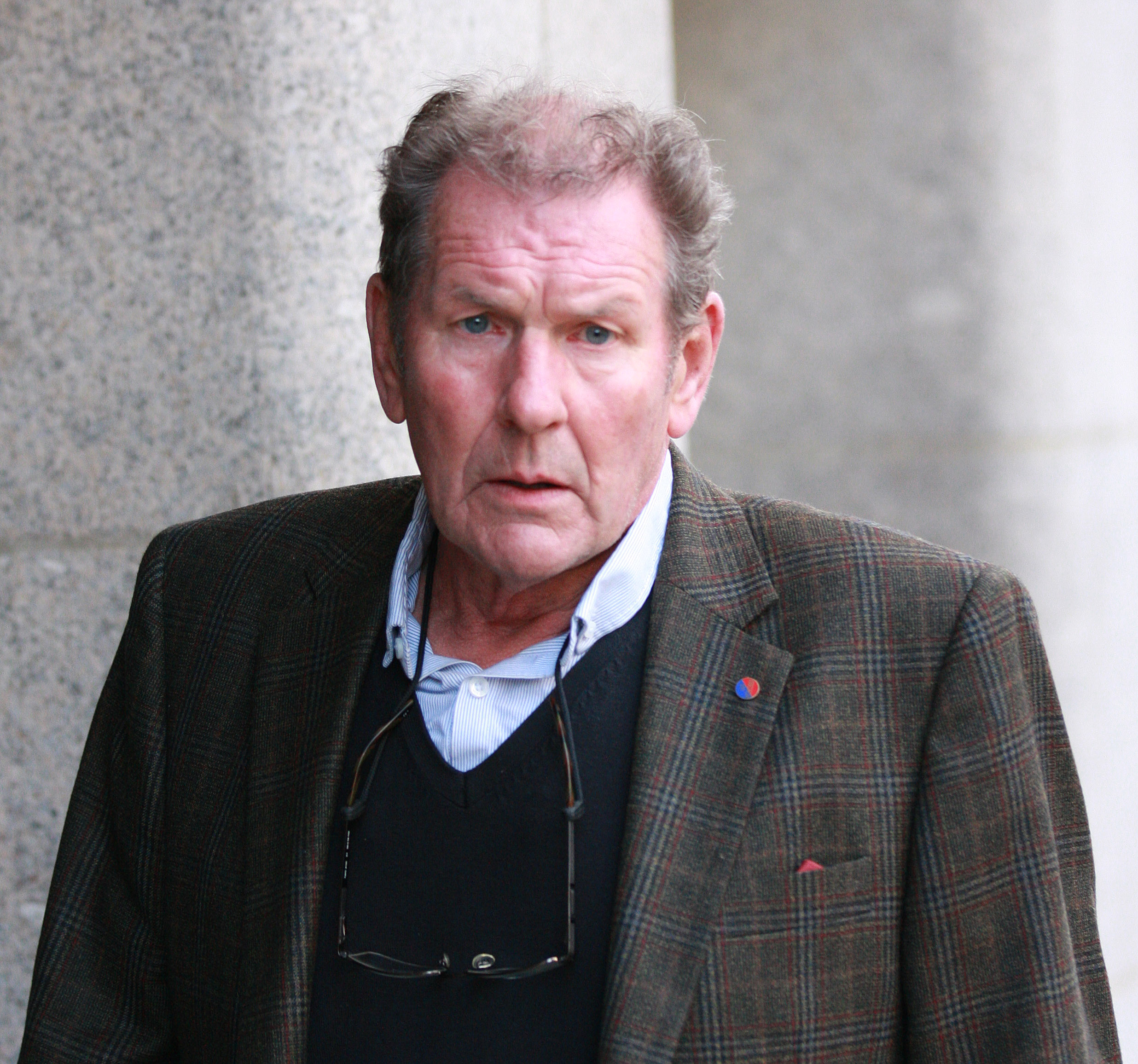
MUNGALL: YORKIE BAR STAR WALKS FREE AFTER SMOTHERING HIS WIFE
Central News, Press Room, Central Criminal Court, Old Bailey, LONDON, EC4.
Tel: 020 7236 0116.
Old Bailey/sa
eMail: news@centralnews.co.uk
http://www.CourtNewsUK.co.uk
23 September 2011
actor…1
WITH TODAY PICS OF MUNGALL
The star of the Yorkie bar adverts who killed his dying wife after struggling to cope with her terminal illness has been spared jail today (Fri).
Retired actor Stuart Mungall, 71, smothered 69-year-old Joan Mungall with a pillow at their home in Tooting, south London.
Mungall, who starred in the cult chocolate bar adverts as a lorry driver during the 1970s, had developed a depressive illness as he struggled to care for his wife of 43 years.
His wife, a close friend of famous actress Jane Asher, was suffering from a neuro-degenerative disease, with similar symptoms to Alzheimer’s.
Her condition had deteriorated rapidly in the months before the killing on December 3 last year.
Mungall, who also appeared in episodes of The Bill, Casualty and Dempsey and Makepeace and on stage during a successful career, phoned his brother, daughter and a close friend to admit what he had done.
When police were called to the couple’s home in Hendham Road, Tooting, southwest London, he said: ‘She’s not in pain anymore. She was in such pain last night.
‘Doctors say do this and that but they cannot make it better, so I made it better.’
He also told a doctor: ‘I couldn’t cope any more. I killed her. It’s been four years now.’
Mungall, born in Forfar, Scotland, was charged with murder but admitted manslaughter on the grounds of diminished responsibility in July.
The plea was accepted by prosecutors after psychiatrists found he had been suffering from a ‘depressive episode’ at the time.
Sentencing Mungall, The Recorder of London Judge Peter Beaumont QC said it was an ‘exceptional’ course of action to take.
The pensioner was jailed for 12 months, suspended for two years. He will also remain under the supervision of the Probation Service for two years.
Mungall’s supervising officer quarterly reports to the judge, as will a psychiatrist to monitor his psychiatric condition.
‘You come before the court as a man who has had a praiseworthy life achieving only distinction in your professional and business life,’ the judge said.
You have earned the plaudits of all who have known you, and they have recognised the devotion you showed to your wife Joan and the care you gave her as she suffered a degenerative and progressive brain disease for which there was no curative treatment.’
‘You had been married for 40 years and the evidence before the court, not just from those who have provided statements gathered by your solicitors, but from some of the witnesses interviewed by police, indicates just how happy and fulfilling your marriage was for the two of you.
‘The evidence is compelling that as your wife’s condition degenerated over the years from 2008 when the diagnosis of degenerative illness was made, you were not only her sole carer but you were caring for her most basic needs with unstinting devotion.
The judge said Mungall had been suffering from ‘a depressive illness that contributed to your actions that bring you here.’
The judge said Mungall’s plea to manslaughter ‘reduces your responsibility for your act of killing her but it does not extinguish it’.
‘You will have to shoulder that responsibility for the rest of your life,’ he said.
‘But the public are entitled and will rightly look to the court in expectation that the sentence I pass measures that responsibility accurately and underlines the fact that you cannot take the life of another as you did with impunity.’
Mrs Mungall was also a successful actress who had worked for the Royal Shakespeare Company, first suffered medical problems in 2008 when she developed epilepsy.
In June 2009 doctors discovered she was suffering from a degenerative brain condition.
Her worsening health caused the couple to last year close the gardening centre business they had owned in Battersea and Tooting, which they started after retiring from the acting profession.
By the autumn of last year she was housebound and effectively bed-ridden, only able to use a zimmer frame or wheelchair, and was almost entirely dependent on her husband.
She remained mentally alert and adopted a ‘realistic and sanguine approach to her condition’, said prosecutor Mark Dennis QC.
‘There is no suggestion that his wife wanted to end her life prematurely, nor had he encouraged the defendant to act as he did.’
The day before she was found dead nurses found her ‘typically upbeat and in positive mood’ during a home visit.
But Mungall was ‘reluctant to accept outside help’ and had failed to accept his wife would need palliative care at a local hospice, the court heard.
‘He developed a depressive illness which led him to snap on the morning of December,’ said the prosecutor.
Mungall had spoken to friends and to his brother Peter about killing his wife and then himself and had told his wife’s nurse the ‘felt trapped’.
The night before the killing told his brother he was ‘thinking about placing a pillow over her face’ but after an hour long telephone conversation Mungall’s brother did not think he would ‘do anything silly’.
Mungall was known to drink to ‘blot out his worries’.
At 3pm he made three phone calls and admitted what he had done. A friend who arrived at the house found him in his night clothes and drunk.
Mrs Mungall was lying dead in her bed seemingly undisturbed. A post-mortem later revealed she had been asphyxiated.
She had been suffering from Pick’s disease and her life expectancy would have been measured in months had she not been killed.
But the prosecutor added: ‘This was a deliberate killing. It was not assisted suicide, nor did it even come close to that.
‘There is no evidence she asked that morning to be killed or asked the day before to be killed.
‘The most the defendant has said to either psychiatrist is that morning he looked in to her eyes and she gave a look that he took to mean he should do what he went on to do.
‘He had chosen to do what he did. No doubt in his own mind doing what he thought in his state was best for him and for her.
‘He has therefore cut short a life.’
The court was told they had been ‘devoted couple throughout their marriage.’
Jane Asher, president of Parkinson’s UK, had known Mrs Mungall for 40 years and gave a speech at her funeral.
She told mourners: ‘I am very sad to say that Stuart is not able to be here today, but I hope he knows his presence is very much felt.’
Miranda Moore QC, defending, said: ‘What neither of them wanted and they almost resented, was people coming in and telling them how to do things.
‘This wasn’t somebody who set out to kill. This was someone who had his own personal responsibility diminished to such an extent that that day he killed the woman he loved.’
Mungall, of Hendham Road, Tooting, admitted manslaughter.
mfl
ENDS